Yes — and the answer is surprisingly simple
If you are really looking for foods that can last for decades and still be edible,
the answer isn’t mysterious at all.
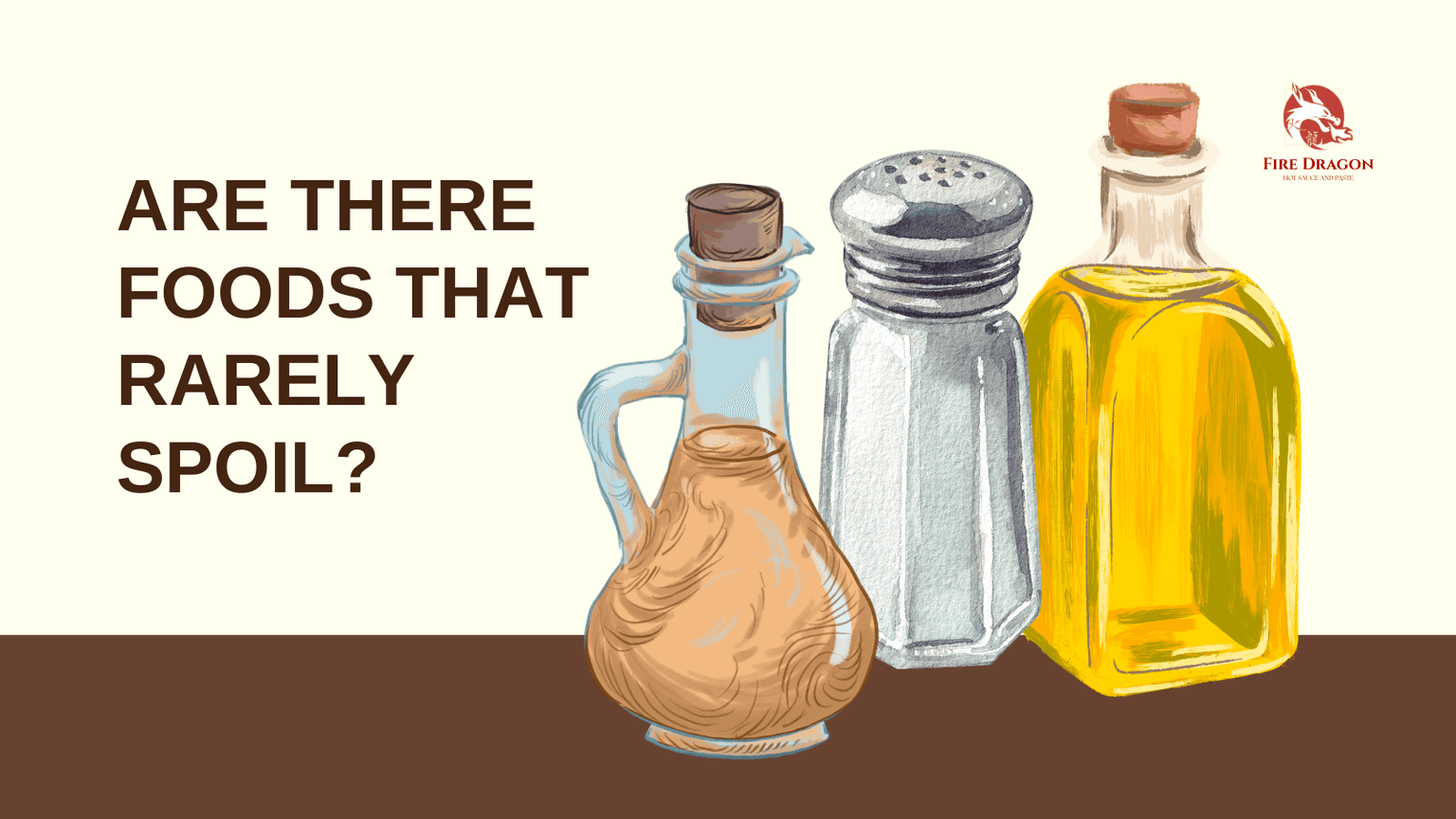
There are only three:
- Salt
- Oil
- Vinegar
Salt remains salt even after a hundred years.
Vinegar is still vinegar after decades.
Oil, as long as it hasn’t clearly oxidized or gone rancid, is still oil.
This is not folklore —
it is one of the most reliable facts in food preservation.
Why do they almost never spoil?
Because they are hostile environments for microorganisms.
-
Salt
Contains almost no usable water,
causing bacteria and mold to dehydrate and die. -
Vinegar
Creates an acidic environment
where most bacteria cannot survive. -
Oil
Does not mix with water,
effectively blocking air and moisture.
In simple terms:
They place food in an environment where microbes cannot live.
Most everyday foods follow the same principle
Foods that “seem to last a long time”
are rarely preserved by accident.
They simply apply the same logic
in different forms.
- Salted fish, pickled vegetables → Salt
- Pickles, vinegar-preserved foods → Acidity
- Chili oil, oil-preserved garlic → Oil as a barrier
- Dried meat, smoked foods → Dehydration
- Vacuum packaging → Removing oxygen
Even modern food processing
has not changed the core idea.
It has only made these methods
more stable and controlled.
Then why do products still have an expiration date?
Because expiration dates come with conditions:
Unopened, sealed, and stored under standard conditions.
Once a package is opened:
- The vacuum is broken
- Air enters
- Moisture enters
- Environmental microbes gain access
The real countdown starts at that moment.
Milk is the easiest example
Unopened milk already has a relatively short shelf life.
Once opened:
- At room temperature, it can spoil within one day
- It is usually recommended to finish within 2–3 days
- Even in the refrigerator,
consumption after 7 days is not advised
Milk does not suddenly “turn bad.”
It simply enters an environment
where microbes grow extremely well.
How does the food industry extend shelf life?
Most packaged foods use at least one of these methods:
- Vacuum sealing
- Nitrogen flushing
- Hot or cold filling
- Airtight containers
All of them aim to do the same thing:
Limit exposure to air, moisture, and bacteria.
But it is important to remember:
Sealed does not mean sterile forever.
It slows change —
it does not stop time.
How should we store food at home?
The principle is simple:
The better you isolate food from its environment, the safer it is.
From most to least stable:
-
Freezing
Microbial activity is nearly halted.
Best for long-term storage. -
Refrigeration
Slows microbial growth.
Suitable for short-term use. -
Room temperature, dry, sealed
Depends on the type of food. -
Room temperature, humid, frequently opened
Highest risk.
A refrigerator is not a safe vault.
Frequent opening and temperature fluctuations
introduce new bacteria.
For sauces especially,
clean utensils and tightly closing the lid
matter more than most people realize.
A realistic and safe guideline for sauces
For oil-based sauces
(such as sambal, dried shrimp chili, ginger-garlic paste):
- Unopened: follow the printed expiration date
- After opening:
- Store refrigerated
- Use clean utensils
- Consume within 1–3 months for best safety
Longer storage may be possible in theory,
but risk increases over time.
If you notice:
- Visible mold
- Unusual odor
- Clear signs of spoilage
Discard it immediately.
No food is worth risking your health.
One sentence worth remembering
Food preservation
is not about “how long something can last.”
It is about:
Whether you are creating a place where microbes can survive.
Understanding this makes food storage
both safer and less stressful.